Wryneck
Jynx torquilla
16-17cm
Appearance of the Wryneck
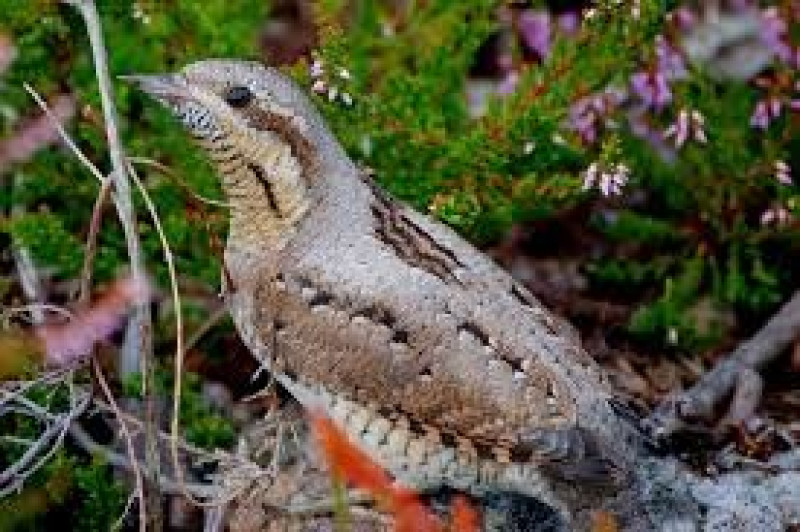
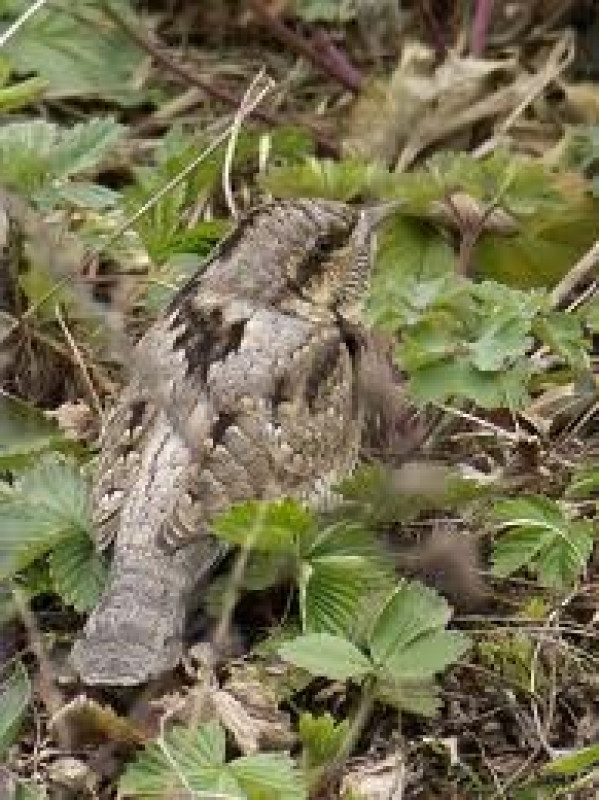
The Wryneck is slender, with a small head, legs and bill. The plumage is very well camouflaged so that it blends in effectively with tree bark. It is mottled with grey, brown and black on top; it's pale beneath but delicately barred, and the throat is buffish and also barred. It has a dark strip across the eye which goes down over the crown to the middle of the back. Juveniles resemble adults but the dark strip is less vivid.
Wryneck Habitat
When populations were larger in the region, Wrynecks inhabited parkland and orchards. When in Europe they live in pine woods, clearings, and the edges of woods.
Character
Mostly eats when it is grounded, hopping in a stilted manner. When in flight it usually travels quite low.
What does the Wryneck eat?
Mostly eat ants, but also feed on beetles, grasshoppers, flies, butterflies, moths and spiders.
Wryneck Breeding
Female lays 7-10 eggs in a hole-nest and both parents incubate for 11-14 days. Both adults feed the young, which fly after about 18-22 days.
Population
Majority of Bee-eaters are migratory, although there are resident populations around the Mediterranean. Many birds head south between August and October, and travel back to breeding territories for March and May. A scarce few birds are thought to breed in the Scottish Highlands, otherwise up to 300 individuals may visit some years, mostly lost on their way to or from Scandinavia.
Observation Tips for the Wryneck
During September, England's south and east coasts are the most promising areas to search for this bird, especially following or during easterly or southeasterly winds.
Voice
Has a shrill 'quee, quee, quee' call which it usually uses on breeding territory.