Spotted Redshank
Tringa erythropus
29-31cm
Appearance of the Spotted Redshank
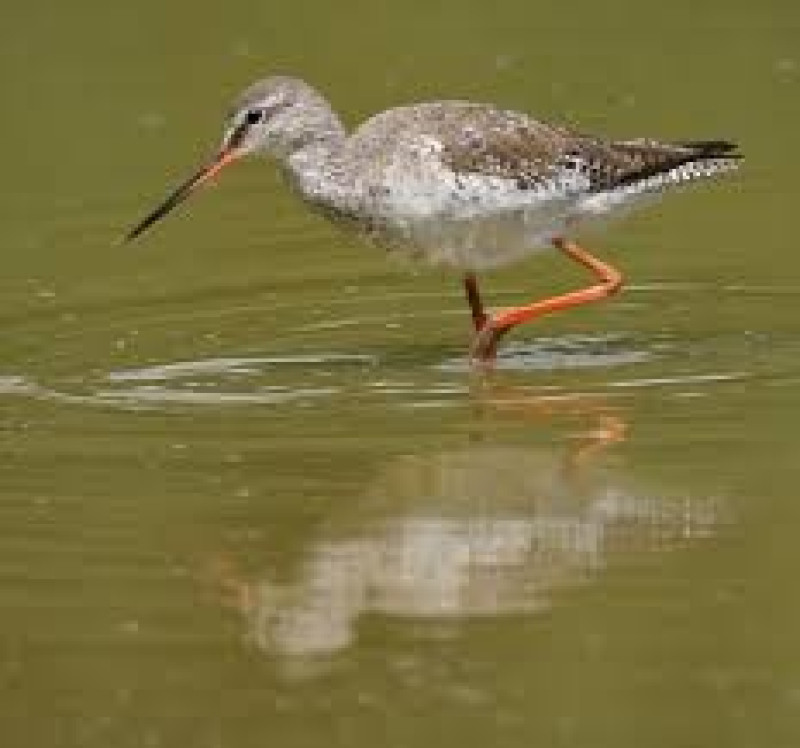
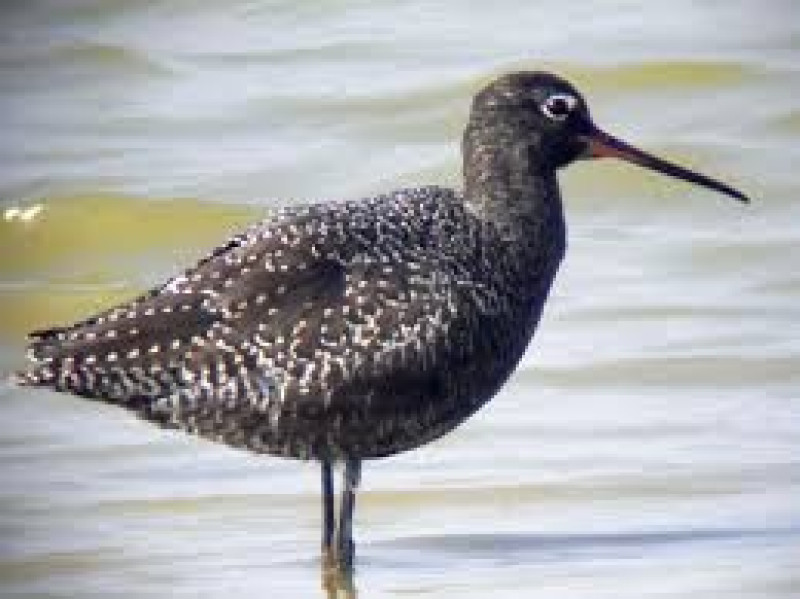
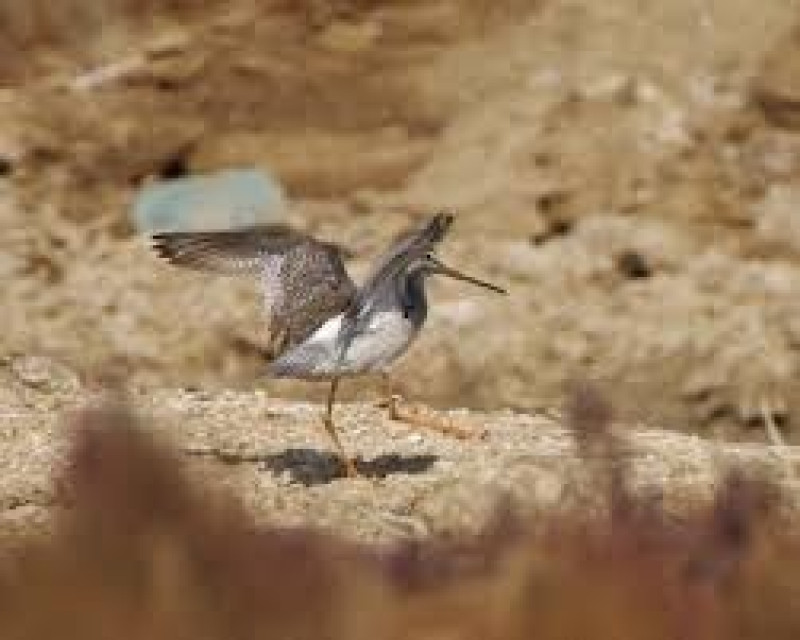
This bird is a bit bigger than the Redshank and it has longer legs and bill (which has a downward point at its tip). The sexes appear similar, but the plumage differs seasonally; for a short while in spring, adults are black with white spots on the back (occasionally seen in the region in late spring or summer). During winter, the upperparts are pale grey with white spotting, and the underparts are white. There's a black line through the eye and the head is pale; the lower half of the bill has a red patch at the base, and the legs are red. Juveniles are similar to winter adults, though their upperparts are browner, the underparts are dusky and barred, and the legs are orange-yellow. When flying, there is a white strip on the back and it lacks the Redshank's white wing-bar.
Spotted Redshank Habitat
Breeding grounds are on Arctic tundra. Outside breeding season, this bird prefers creeks, channels and other freshwater sites, though it may also head to coastal marshes and estuaries.
Character
When feeding, it is calm and sure of its movements, and often looks for food in water of depths that require occasional swimming; will also submerge its head. Its legs trail when it flies, and it is usually solitary or in small groups.
What does the Spotted Redshank eat?
Diet includes larvae of water beetles and flies, moth caterpillars, shrimps, shellfish, worms and small fish.
Spotted Redshank Breeding
Does not breed in the region. Female usually lays 4 eggs which are incubated mostly by the male. Male tends to the young, as female may depart the breeding site before the eggs hatch.
Population
The peak migration through Britain and Ireland is during September, and return migration occurs during April and May. Some non-breeding birds stay on British coasts for the summer. Approximately 400-500 birds may be in the region during migrations, and about 100 remain for the winter.
Observation Tips for the Spotted Redshank
The migrating patterns of this bird mean the region sometimes sees birds in partial breeding plumage, which can confuse the process of identification. When in the air, birds lack the white trailing wing-edge of the Redshank, something which can help with separating the two species. August and September provide the most opportune times for viewing this species, and estuaries on the south or east coasts of England are promising territories.
Voice
Has a diagnostic 'chu-it' call in flight.