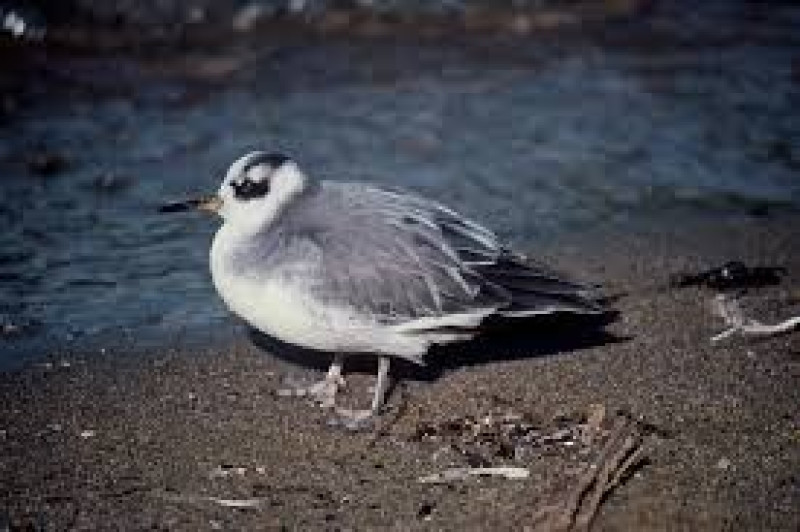
Grey Phalarope
Phalaropus fulicarius
20-22cm
Appearance of the Grey Phalarope
Bigger than the Red-necked Phalarope with a stouter bill (which is yellow at the base), and larger wings. Sexes are different when in breeding plumage, although sightings in the region are unusual at that time of year. The winter adult is grey on top and white below with a dark nape, white face and a black mark through the eye. In breeding plumage, the female's back is dark brown with buff streaks, her face has a white patch, and she's orange-red down the neck and in variable amounts on her underparts. The male's markings are less vivid. Juvenile birds are the most common in the region; they appear similar to the winter adult but they have a wider spread of buff throughout plumage. Grey works its way into the plumage at the first winter.
Grey Phalarope Habitat
Breeds on the Arctic coast, near to marshy tundra. Spends winter on the ocean, though may visit inland pools or marshes by the coast when migrating.
Character
Often feeds while swimming, and may spin while it does so; also has a habit of bobbing its head. May feed on land in close proximity to water and is usually seen alone, unless migrating, when it may form groups.
What does the Grey Phalarope eat?
Diet includes flies and their larvae, beetles, bugs, springtails, shrimps and marine plankton.
Grey Phalarope Breeding
Breeding does not occur in Britain or Ireland. The nest is selected from ground scrapes made by male and female, and the female usually lays 4 eggs. The male incubates for 18-20 days; if males are in excess, the female finds another male to mate with. Male tends to the young, though they can feed themselves, and they can fly at about 16-18 days old.
Population
Non-breeding birds depart Arctic habitats around June, then breeding females in July, followed by the males and the juveniles. Sightings of birds who have lost their way in bad weather are most common between September and November. There are less than 200 sightings most years, and most of those are juvenile birds.
Observation Tips for the Grey Phalarope
A fairly confiding species that can be largely at ease under human observation. The birds that are found on land outside the breeding season have been taken off course due to weather. This means its worth searching the coast in September or October, particularly after strong westerly or southwesterly winds.
Voice
The most regular call is low-pitched 'wit', and it has a piercing 'pit' call during flight.