Arctic Tern
Sterna paradisaea
33-35cm
Appearance of the Arctic Tern
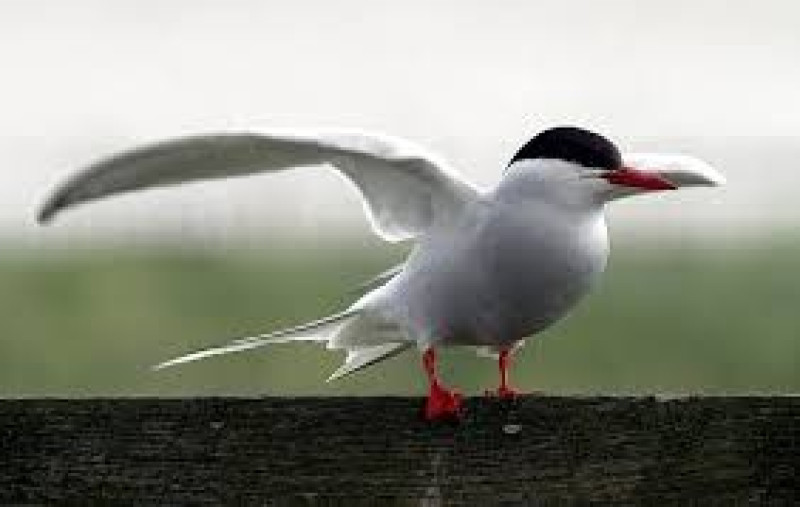
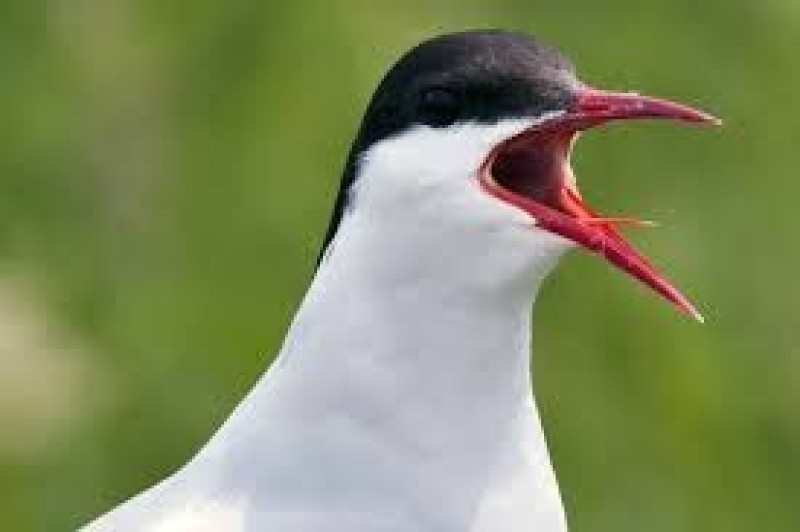
A slighter bird than the Common Tern, the Arctic Tern is only seen in summer plumage in the region. The sexes are similar. Underparts are pale, smoky grey, and are lightest on the throat and cheeks, darkening on the belly. The upperparts are grey, the rump white, it has a black cap, long tail streamers, short red legs, and a red bill. When flying, flight feathers can appear opaque, and there's a dark trailing edge; wings look grey from above. Juvenile birds are white underneath, upperparts are scaly and grey, there's a partial black cap, white forehead, and a red base on the black bill. Wings have a dark leading edge and a white trailing one when flying.
Arctic Tern Habitat
Breeding grounds are predominately on the coast or on offshore islands; may also go to rivers where there are rocky islands and stone beaches. When not breeding, lives almost exclusively at sea.
Character
Has a staggered plunge-dive when fishing; it hovers, than lowers, then hovers again before completing the dive into water. A colonial breeding who feeds in groups and migrates in flocks. Is territorial when breeding, showing aggression towards invaders.
What does the Arctic Tern eat?
Fish including sand eels, sprats, herring, caplin and sticklebacks, insects, crustaceans and may also eat worms.
Arctic Tern Breeding
Breeding in Britain begins in May. Female lays 1 or 2 eggs and both adults share incubation for 20-24 days. Hatchlings move to vegetation close by after a few days, and though they fly at about 21-24 days old, they stay with parents for another month or two.
Population
The Arctic Tern is a summer visitor and passage migrant. It migrates longer distances than any other bird, departing breeding grounds between July and early October and moving southwards. It reaches the Antarctic between October and December, then returns to breeding territories by May or June. The most recent census showed approximately 53 000 pairs in the UK and 2700 in Ireland, though numbers have been declining over the last decade.
Observation Tips for the Arctic Tern
Orkney and Shetland are strongholds of the Arctic Tern, which is seen there in spring and summer. The Farne Islands in Northumberland are really worth a visit for sensational viewing opportunities.
Voice
Has a grating 'kee-arr', or a shrill 'krt-krt-krt' that's usually uttered in close proximity to the nest.