Bluethroat
Luscinia svecica
14cm
Appearance of the Bluethroat
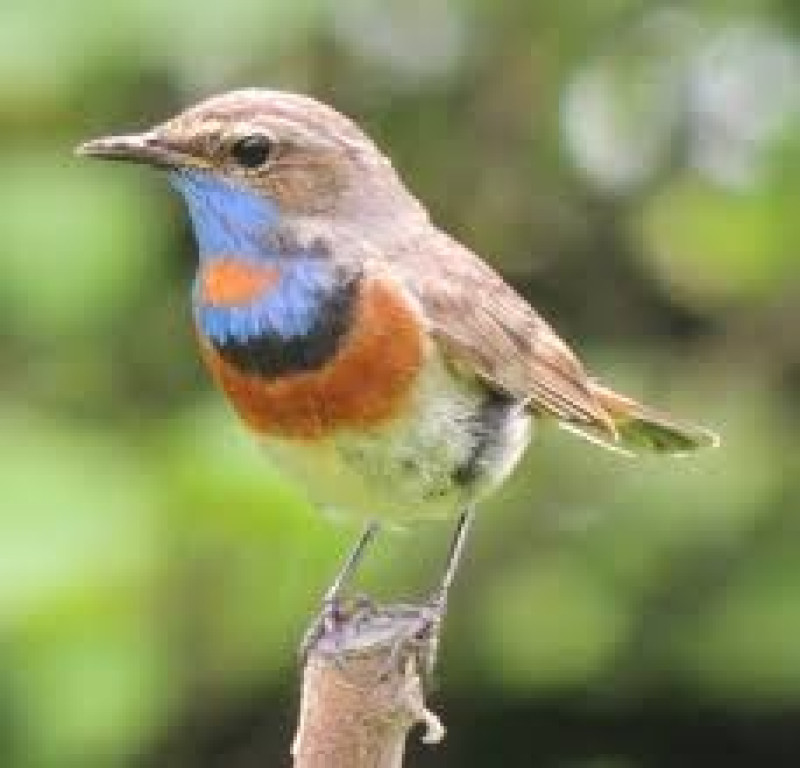
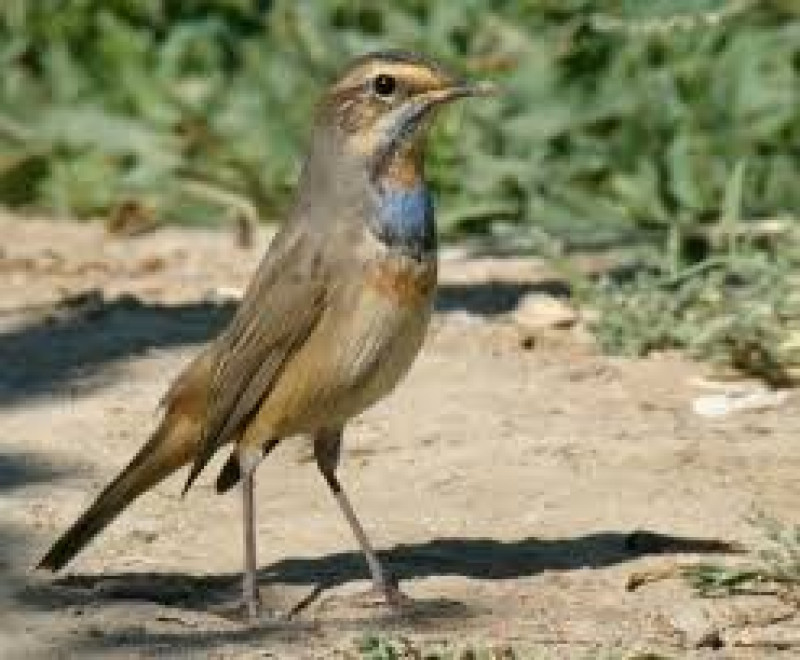
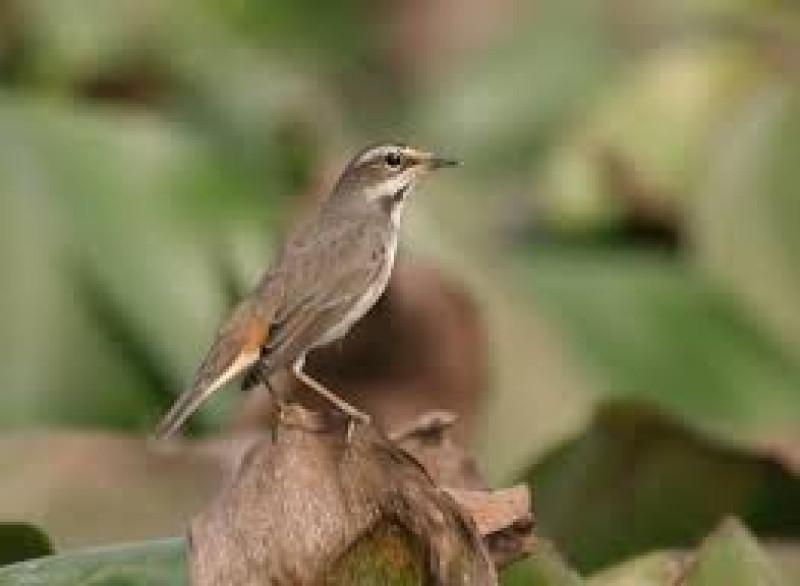
The Bluethroat has distinctive reddish sides to the tail's base; the sexes are different. Males are mostly greyish-brown above, and white below. He has a vivid blue breast and throat, hence where he gets his name; the blue has bands of white, red and black beneath it. There is often a white or reddish circular patch within the blue, but this depends on race. The eye has a white ring and stripe. During autumn the amounts of red and blue are variable, and the blue throat may appear incomplete. Females have varying amounts of blue on the throat, but it is usually predominately white. Juveniles have the red tail colours, but they are browner and more spotted overall, and they lack throat colour.
Bluethroat Habitat
Is mostly near the coast when in the region, though it finds short grassy areas near to the water in which to feed. Breeds in birch forests in Europe, or near marshes.
Character
Mostly uses dense vegetation to feed in, spending a lot of time on the ground, where it darts from one spot to the next. Often hops and holds its tail erect, allowing wings to sag.
What does the Bluethroat eat?
Diet includes beetles, spiders, moth caterpillars and berries in autumn.
Bluethroat Breeding
Rarely breeds in the region. Female lays 5-7 eggs which she incubates with minimal assistance from male for 13-14 days. Both adults feed the young, which are able to fly at about 14 days old.
Population
This is a regular passage migrant, though it visits the region in small numbers. Majority of Bluethroats arrive in the region for spring or autumn and are most numerous in the Northern Isles. A handful of males remain on their territories in spring, and the first recorded case of breeding was in 1995. Numbers of visiting birds vary, but the average is approximately 100 in a year. Rarely seen in Ireland.
Observation Tips for the Bluethroat
Easterly and southeasterly winds may carry Bluethroats to coasts between Suffolk and Shetland Islands; this is most likely to happen at the beginning of May or in September. The Bluethroat is quite a lucky find, as they are quite timid, but they may remain in one area for multiple days.
Voice
Has an abrupt 'tak, tak' call, a mourful 'huuit', and a 'tchick' call, too. Songflight is a repetitive 'zruu, zruu, zruu', and the Bluethroat has a habit of copying the sounds of other birds.