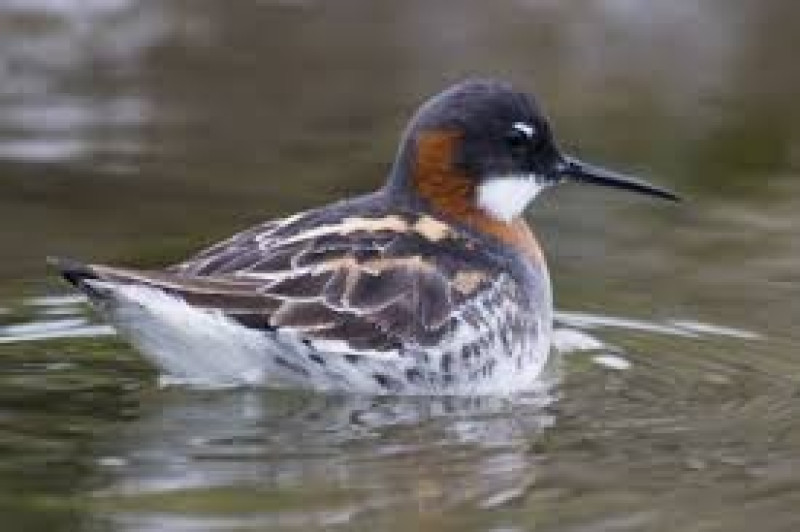
Red-necked Phalarope
Phalaropus lobatus
18-19cm
Appearance of the Red-necked Phalarope
An elegant wader similar in size to Dunlin. It has a dark bill pointed like a needle, a small head and a slender neck. Plumage varies by season and the sexes are dissimilar. During spring/summer, the female has greyish-brown upperparts, a grey breast and head, mottled flanks, white underparts and throat, an orange section along either side of the neck, and buffish margins to many of the back feathers. The colouring in the male is less vivid, and his upperparts have more buffish streaking. Winter birds are mostly grey above and white below; there's a black marking through the eye. Juveniles resemble winter adults but the upperparts are more brown, though they accumulate grey back feathers as it nears autumn. When flying, there's a white wing bar on otherwise darkish wings.
Red-necked Phalarope Habitat
Breeding grounds in Britain are near freshwater marshy pools with rising vegetation; flooded peat cuttings are ideal. Spends winter on the open ocean.
Character
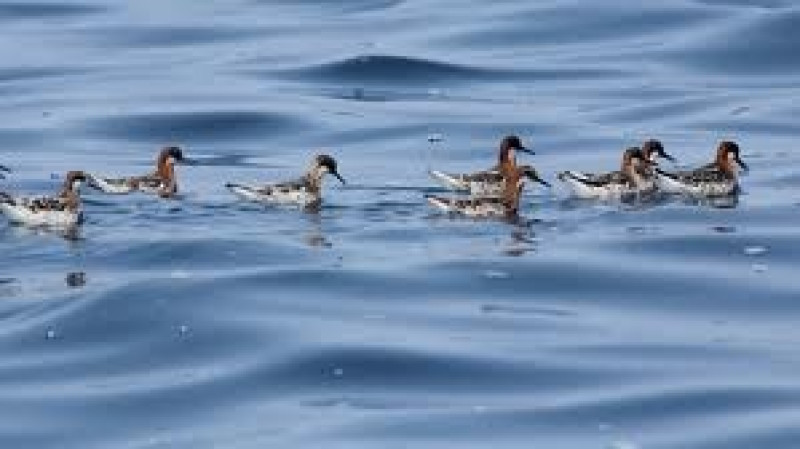
Swims more regularly than it wades and uses its bill to get invertebrates from the water's surface; otherwise swims with a straightened neck. Surprisingly bold, and it gathers in large flocks on the ocean during winter.
What does the Red-necked Phalarope eat?
Diet predominately consists of insects, especially flies and their larvae. Also consumes springtails, beetles, butterflies, moths, spiders and small worms.
Red-necked Phalarope Breeding
Nesting occurs on the ground in close proximity to water. Female selects a nest-scrape made by herself or the male and lays 4 eggs there. The male incubates for 17-21 days and hatchlings soon leave the nest for nearby vegetation where they can feed themselves. Male tends to them until they're independent (after approximately 14 days); can usually fly after about 20 days.
Population
Begins to vacate northern breeding grounds in late June; the females depart first, followed by males and juveniles. Many birds travel south-east over Europe and congregate on the Arabian Sea toward the end of October; they are usually back on breeding grounds by May. There are not many regular breeding sites in Britain; about 20 males hold territory each year. Approximately 30 birds migrate through the region in August and September, most of which are juveniles.
Observation Tips for the Red-necked Phalarope
Since Britain and Ireland are at the full stretch of this bird's southern migratory habitat, the birds are most common in the far north, particularly the Shetland Islands. A visit to the area during spring may reveal Red-necked Phalaropes in their breeding plumage. Birds are protected under conservation law when nesting, so be sure to leave them undisturbed.
Voice
Has an infrequent 'kip' call, usually given when flying or on water.