Merlin
Falco columbarius
25-30cm
Appearance of the Merlin
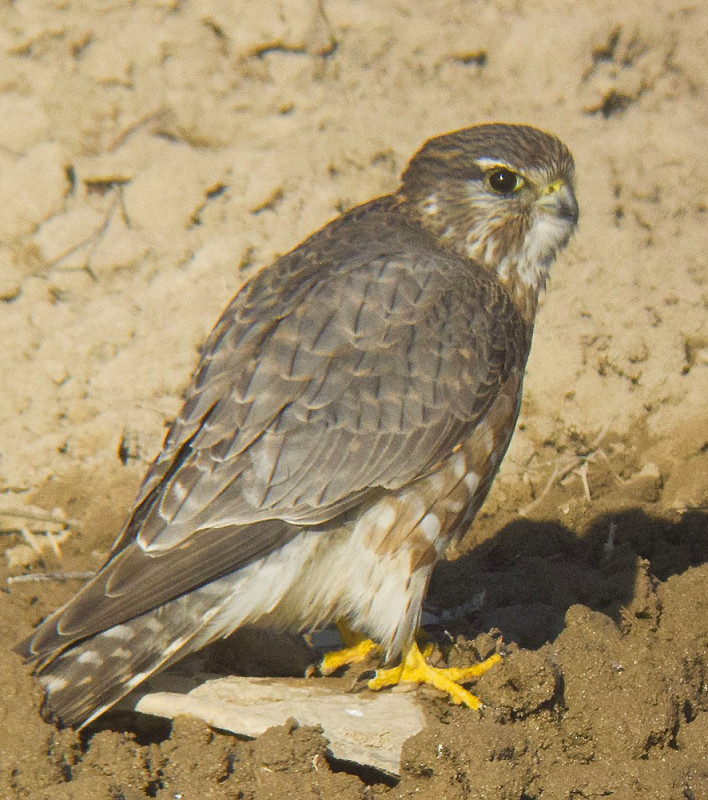
This is the smallest falcon in the region; its wings are pointed and short with wide bases. The sexes are different. Male birds have blue-grey upperparts, a rusty breast that is streaked with dark, reddish-brown cheeks and nape, dark wingtips and a dark band on the tail. When flying, the plumage of the back, inner wings and tail are in contrast. Female birds are larger than the male and browner; the breast is pale but streaked with brown, the underparts decorated with large dark spots. Juvenile birds are similar to females, though they're darker with white-flecked napes.
Merlin Habitat
This bird has breeding grounds in the uplands in the north and west of Britain, and in parts of Ireland too. Prefers to breed on the ground in heather moorland and less often by the coast; also nests more and more frequently near the edges of older conifer forests. During winter many birds move to lower land, where they can hunt Meadow Pipits and Skylarks.
Character
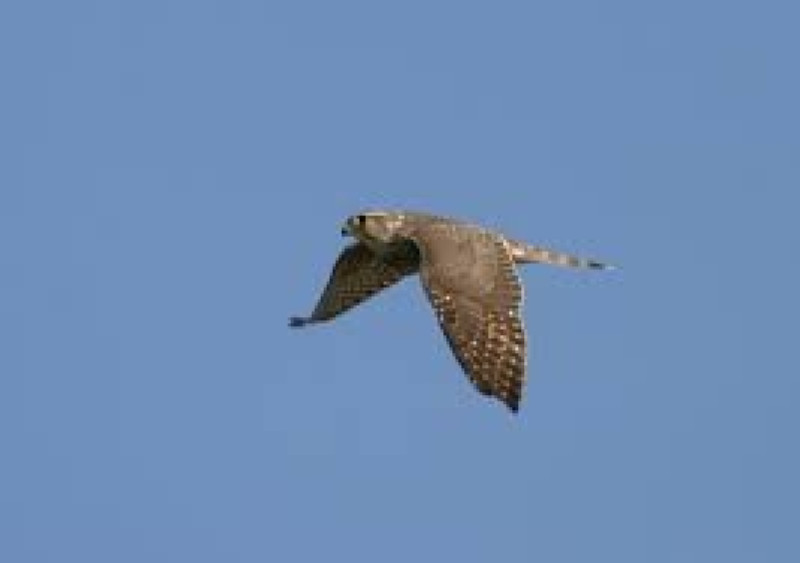
This bird is most often seen flying low to the ground in pursuit of prey, though it also has a habit of perching for long periods of time. It is a solitary bird though sometimes hunts in teams of two, and has rapid, direct flight.
What does the Merlin eat?
Diet consists mostly of small birds such as Meadow Pipit, Skylark, Chaffinch and Wheater, though it can prey on bigger birds, for example the Mistle Thrush. Also eats voles, bats, moths, and beetles.
Merlin Breeding
The female lays 3-5 eggs which both her and the male incubate for 28-32 days. Hatchlings depart the nest around 18 days and wander in nearby vegetation. After 32 days they can fly, though they rely on their parents for a month afterwards.
Population
Approximately 1200 pairs breed in the UK and up to 130 in Ireland. Some migrants from places such as Iceland boost the region's numbers in the winter.
Observation Tips for the Merlin
No intrusion should be made on Merlins at their nests due to their fragility. A walk across moorland, particularly areas with heather, in Wales, northern England or Scotland, may provide observation opportunities.
Voice
Has a high-pitched 'kee-kee-kee' that is usually uttered near its nest when it is surprised or thinks it is in danger.